












































FREE TOOLS
Gas Rate Calculator
Choose between natural gas, LPG, metric, and imperial to gas rate an appliance. Supports 1 or 2-minute test times for metric tests.
GET THE FREE APP:


Gas Rate Calculator
Work out gas rate, gross & net heat input from a meter test.
Setup
Test duration
Meter readings
Enter your readings, then press Calculate.
Timer — count down the test
Results
History
For guidance only. Gas rate is derived from the meter test you enter; gross and net heat input use standard calorific values (10.76 kW per m³/hr for natural gas, 26.39 for LPG) and a 1.11 gross-to-net ratio. Always verify against the appliance data plate and current standards before relying on a result. Gas Engineer Software accepts no liability for tests carried out on the basis of this tool.
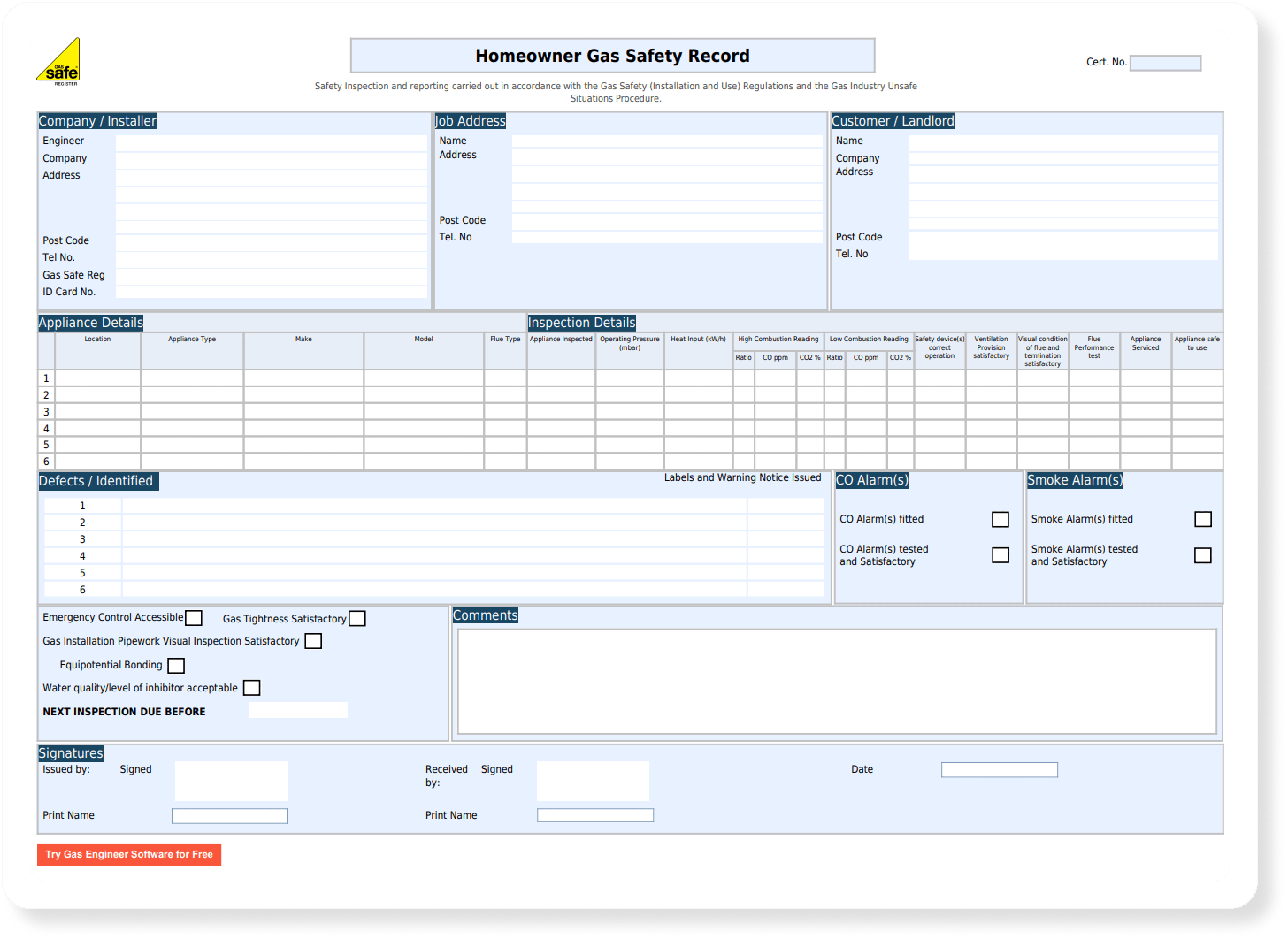
Copy your results directly into a digital gas certificate
Save time and look professional with all-in-one gas certificate software.
No card details required | Fast & easy setup
How to use this Gas Rate Calculator
Getting started:
- Select the gas type.
- Select the measurement system.
- Turn off all other gas appliances.
- Allow the appliance to warm up for 10 minutes.
Then, depending on metric or imperial gas rating:
Metric:
- Take an initial meter reading and enter it in the text field.
- Start the timer.
- When the timer finishes, take and enter a final reading in the text field.
- Click anywhere and the results will be calculated.
Imperial:
- Start the timer.
- Stop the timer when the test dial completes one revolution.
- Record the results.
How to use this Gas Rate Calculator
How gas rates are calculated
Gas rating an appliance is a fairly simple calculation, but there are a few different things that need to be taken into account. Whether you’re gas rating an imperial or metric boiler using natural gas or LPG will all change your resulting figures, for example.
Here is how our calculator works:
The constant values used:
- The calorific value* (CV) for natural gas: In our calculator, we use a value of 10.76 kW/m³ (1040 BTU/ft³)
- The calorific value* (CV) for LPG: In our calculator, we use a value of 26.39 kW/m³ (2516 BTU/ft³)
- The gross to net conversion rate: 1.11
- ft³ to m³ conversion rate: 0.0283
- BTU to kW conversion rate: 3412
*Note that calorific values will vary slightly based on the gas supplier and location.
Metric gas rating calculations:
Gas rate:
3600 (seconds in 1 hour) * (final reading - initial reading)(m³) / test time (s)
e.g.
3600 * 0.053 / 120 = 1.59m3/hr
Gross
Gas rate * CV (kW/m³)
e.g. (using the CV of natural gas):
(3600* 0.053 * 10.76) / 120 = 17.11kW
Net
Gross / net conversion rate
e.g.
((3600* 0.053 * 10.76) / 120) / 1.1 = 15.41kW
Imperial gas rating calculations:
Gas rate:
3600 (seconds in 1 hour) * ft³ to m³ conversion rate / timer (seconds)
e.g.
(3600 * 0.0283) / 45 = 2.26m³/hr
Gross:
3600 (seconds in 1 hour) * CV (BTU/ft) / timer (seconds) * BTU to kW conversion rate
e.g. (using the CV of natural gas)
(3600* 1040) / (45*3412) = 24.38 kW
Net:
Gross / net conversion rate
e.g.
((3600* 1040) / (45*3412))/1.1 = 21.97 kW
Metric gas rating calculations:
Gas rate:
3600 (seconds in 1 hour) * (final reading - initial reading)(m³) / test time (s)
e.g.
3600 * 0.053 / 120 = 1.59m3/hr
Gross
Gas rate * CV (kW/m³)
e.g. (using the CV of natural gas):
(3600* 0.053 * 10.76) / 120 = 17.11kW
Net
Gross / net conversion rate
e.g.
((3600* 0.053 * 10.76) / 120) / 1.1 = 15.41kW
Imperial gas rating calculations:
Gas rate:
3600 (seconds in 1 hour) * ft³ to m³ conversion rate / timer (seconds)
e.g.
(3600 * 0.0283) / 45 = 2.26m³/hr
Gross:
3600 (seconds in 1 hour) * CV (BTU/ft) / timer (seconds) * BTU to kW conversion rate
e.g.
(3600* 1040) / (45*3412) = 24.38 kW
Net:
Gross / net conversion rate
e.g.
((3600* 1040) / (45*3412))/1.1 = 21.97 kW
Frequently asked questions
How to convert between m³/hr, kW and kWh
To convert a gas rate to heat input: multiply the gas rate in m³/hr by 10.76 for natural gas (or 26.39 for LPG) to get the gross heat input in kW, then divide by 1.11 for the net figure. To go the other way, divide the kW figure by the same calorific value.
What should an appliance's gas rate be?
There's no single "correct" gas rate — it depends on the appliance. Compare your measured heat input against the heat input figure on the data plate, not the central-heating output. A boiler badged "30 kW" is usually quoting its output; its heat input will be a different number, so always read the plate.
UK data plates quote heat input as a net figure, so convert your meter result to net (divide gross by 1.11) before you compare. As a guide, here's the expected gas rate for common net heat inputs on natural gas:
Gross vs net heat input — what's the difference?
Every fuel has a calorific value: the amount of energy released when it's burned. That value can be quoted two ways. The gross (or higher) value includes the latent heat in the water vapour produced during combustion; the net (or lower) value leaves it out.
Your meter measures the gas supplied, which gives you a gross figure. UK appliance data plates and Building Regulations work in net, so the calculator divides the gross result by 1.11 to give you a net figure you can compare like-for-like. If you're checking against the data plate, use the net number.
What is a gas rate?
A gas rate is the volume of gas an appliance burns over a set period, used to confirm it's operating at its rated heat input and within manufacturer specification. It's measured in m³/hr at the meter and converted to kW to compare with the appliance's data plate.
How do you calculate a gas rate?
On a metric meter, take an initial reading, run the appliance for a timed test (usually 2 minutes), take a final reading, and divide the gas used by the time: gas rate = 3600 × (final − initial) ÷ test seconds. On an imperial meter, time one full revolution of the test dial. Multiply the m³/hr figure by the gas's calorific value to get the heat input in kW.
Is there a contract or notice period?
No. Monthly billing, cancel anytime, no notice required. Annual plans come with a discount but aren't compulsory — and if you leave, you can export every record you've created.
Why are the calorific values different for natural gas and LPG?
Each fuel releases a different amount of energy when burned. LPG is far more energy-dense than natural gas, so the same volume produces more heat — which is why the calculator uses a different calorific value for each, and why you must select the correct fuel before testing.
Should I use the metric or imperial method?
Use whichever matches the meter on site. Modern metric meters read in cubic metres, so you take two readings over a timed test. Older imperial meters read in cubic feet, so you time one revolution of the test dial instead.
Is the gas rate calculator accurate and reliable?
Yes. The calculator uses the standard calorific values and conversion factors, and it's used by thousands of UK gas engineers. Working it out by hand on site is where mistakes creep in — the calculator removes that risk. Always verify the final figure against the appliance data plate and current standards.

The Number #1 Software for the UK Heating & Plumbing Industry
The number #1 software for the UK heating & plumbing industry for over 10 years. Easily manage your customers, engineers & jobs. Grow your business with less paperwork, less hassle and less work.